Blogs

2026-09-23
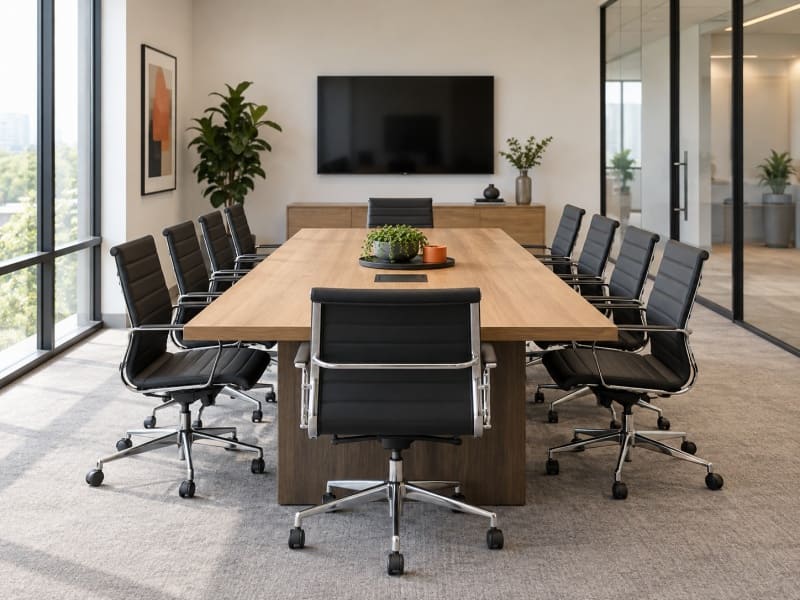
A few things actually decide whether conference room chairs are the right fit: how long meetings usually run, how many people you're seating, your table size, the room itself, comfort, how easily the chairs move around, and budget.
Short meetings — the ten, fifteen-minute kind — don't call for much. Keep it simple and light, something that's easy to push in and out. But once meetings start running an hour or two, lumbar support, a decent seat cushion, armrests, and some basic adjustability stop being extras and start being necessary.
Fit matters too. A chair might feel great on its own, but if it's too wide, the armrests sit too high, or it blocks the walkway once pulled out, it's not going to work in your room no matter how comfortable it is.
So don't pick conference room chairs off a photo alone. Think about where they're going, who'll actually be sitting in them, and how long people will be there each time — that's what actually decides the right chair, not how good it looks in a catalog shot.
What kind of meetings does your team actually have, and how long do they usually run?
That's the first question worth answering before picking conference chairs.
If most meetings only run 20 to 30 minutes, keep it simple — a chair that's easy to move around, without needing height adjustment, recline, or elaborate lumbar controls. A seat that's the right size and a backrest with basic support covers it.
Once meetings start running 30 minutes to two hours, look for a padded seat, a supportive back, and armrests. The longer someone's stuck in a chair, the more a hard seat or an overly upright backrest starts to show — and once people get uncomfortable, they stop paying attention.
For board meetings, client meetings, or anything that drags on, a more comfortable high-back chair makes sense, or something ergonomic enough for meeting room use. It doesn't need every adjustment a daily office chair has, but basic height, swivel, and tilt earn their keep.
What the room is used for matters just as much.
A boardroom that's always set up the same way can go with something formal-looking — arms, casters, the works. Training rooms or spaces that get rearranged often are better off light, stackable, or nestable.
There's no need to go hunting for the "best conference room chairs" right away. Work out how the room actually gets used first, then pick chairs that fit that — that's usually the more reliable way to land on the right one.
Most people shopping for conference chairs just look at the table spec — "seats 8" or "seats 10" — and buy that many chairs.
But a table labeled "seats ten" doesn't mean any ten chairs will actually squeeze in there comfortably.
Chair width swings a lot depending on the style. Armless chairs stay narrow, while big high-back models eat up a lot more room. Put wide armrests on every chair, and a table meant for ten might really only fit eight without feeling tight.
As a general rule, plan for roughly 24 to 30 inches — about 610 to 760 mm — per seat along the table's edge. The actual number depends on chair width, armrests, and where the table legs land.
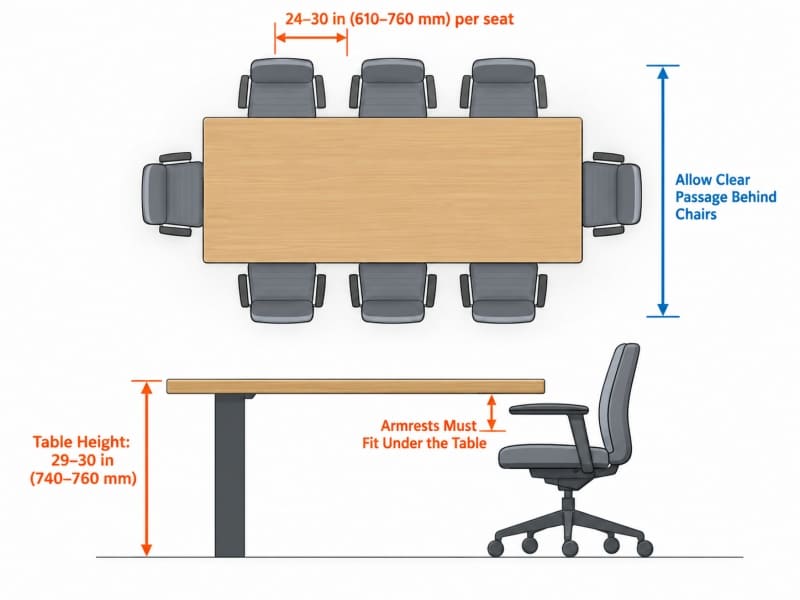
When picking chairs for a conference table, there are three measurements worth checking:
First, seat height. Most conference tables sit around 29 to 30 inches, or 740 to 760 mm. Too low, and the table feels too high; too tall, and knees start hitting the underside.
Second, armrest height. If the arms sit higher than the table's underside, the chair can't tuck all the way in — it just sits out in the walkway whenever no one's using it.
Third, clearance behind the chair. People need room to pull the chair back to sit down or get up. If the back of it is jammed against a wall, a cabinet, or another row of seats, that gets old fast.
Before locking in the total number of meeting chairs, it's worth actually measuring the table, the room, and the chairs themselves — not just going off product photos, since the rooms in those photos are almost always roomier than yours turns out to be.
If headcount might grow, order an extra chair or two of the same model. But there's no need to cram the current table full of seats for people who aren't even hired yet.
A comfortable conference chair doesn't need to be big or heavily padded. What actually matters is the seat, the backrest, the armrests, and how adjustable it is.
It needs to be wide enough for different body types to sit normally. Depth matters too — if the front edge digs into the back of the knees, shorter people can't get their back against the backrest at all. Too shallow, and there's no thigh support.
More cushion isn't automatically better either. A seat that's too soft feels nice for the first minute, but bodies sink into it over time. Comfortable conference room chairs built for commercial use need a firmness that sits somewhere in the middle — and holds up without going flat after months of daily use.
Short meetings just need basic back support. For longer ones, the backrest should actually follow the curve of the lower back instead of leaving it hanging. When looking at ergonomic chairs for a conference room, check the shape of the backrest, where the lumbar support sits, and whether it allows a slight recline.
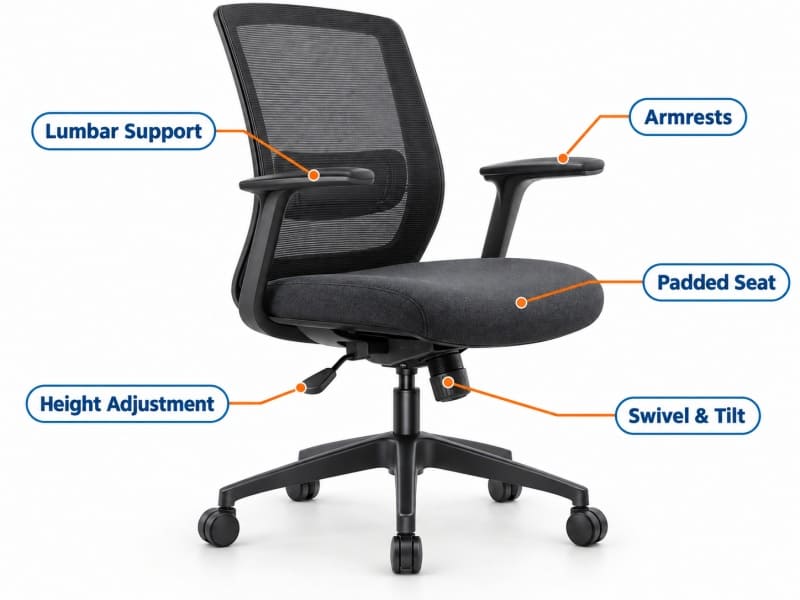
Armrests earn their place in longer meetings — somewhere for the arms to rest, and they make standing up and sitting down easier. But don't judge them on looks alone. Check the height and width before buying, or the chair might not fit under the table at all.
Shopping for conference room chairs with wheels and arms? Check whether the arms clear the table edge, and whether the casters actually suit your floor.
Since conference chairs usually get passed between different people throughout the day, a basic pneumatic height adjustment goes a long way — tall or short, anyone can adjust it in seconds without digging through instructions.
Swivel is worth having too. People can turn toward whoever's speaking, the screen, or the whiteboard without dragging the whole chair around. A slight recline helps cut down the fatigue that comes from sitting in one position too long.
On materials: mesh backs breathe better, which suits warmer climates or offices where chairs get used constantly. Fabric feels softer and comes in more colors. PU leather wipes clean easily and looks more formal — which is why it shows up so often in client rooms and boardrooms.
Not every conference chair needs every feature stacked on. The longer meetings run, the more comfort and adjustability matter. The shorter they are, the more it makes sense to just keep things simple, light, and easy.
Casters or fixed legs? It comes down to how the room actually gets used.
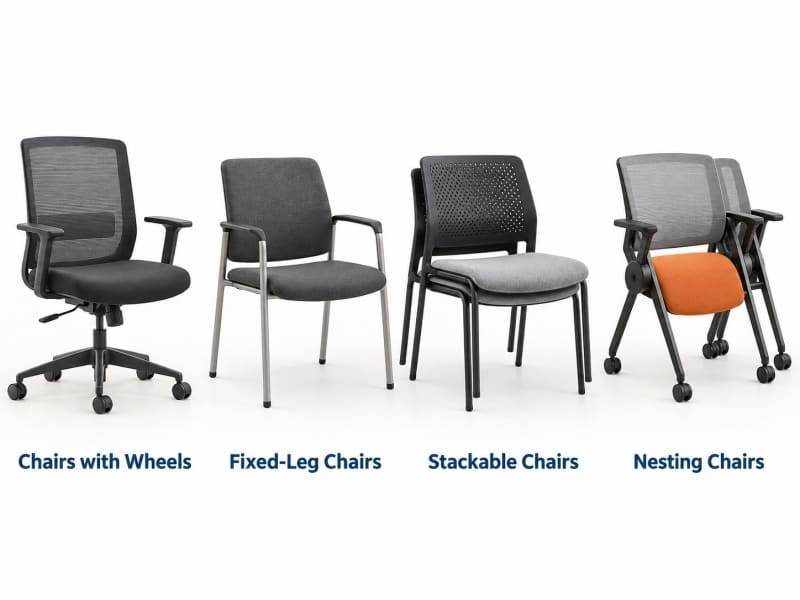
Chairs with wheels make sense around a table that stays in one place — people can pull back, scoot over, or spin toward whoever's talking without dragging the chair across the floor.
Got a lot of screen-watching, turning to face the speaker, side conversations? Casters and swivel help there. Carpet needs carpet-rated casters; hard floors — wood, tile, whatever — do better with softer PU wheels so you're not dealing with noise and scuff marks.
Fixed legs hold still and stay tidy without much effort, which is why they show up in formal meeting rooms and visitor areas — anywhere the seats basically never move. Four-leg models are usually lighter, and some stack too.
Stacking chairs are the answer when you need a room full of seats occasionally but an empty floor the rest of the time — stack a bunch together and reclaim the space. Just check the manufacturer's max stack height before buying instead of assuming the chairs can stack as high as you'd like.
Nesting chairs usually come with casters and a flip-up seat. Flip the seat up, and the chairs push together front to back. No lifting them one by one like with stackable chairs — which is why they work well in training rooms and spaces that get rearranged a lot.
If the table setup never changes, chairs with casters are usually the easier call. If a room runs training in the morning and discussions in the afternoon, nesting chairs probably save more hassle. Need to store a lot of backup seating? Stackable chairs take up the least space.
Whether the chairs will need moving around often is worth thinking about before buying — a conference chair is there for people to sit in, not for staff to get a workout hauling it around.
Conference rooms host clients, suppliers, partners — so how the chairs look actually matters. Consistent, well-matched conference seating makes the whole room read as more professional.
A formal boardroom calls for high-back, upholstered, or leather chairs. A regular team meeting room can get by fine with mid-back mesh or fabric. Training rooms do better with something light, on wheels, or easy to tuck away.
Chair color and material should generally match the table, the walls, whatever fits the company's look. But looks can't be the whole decision.
Different people use these chairs every day. Some sit down carefully, some drag the chair, some lean their full weight on the armrests. So the frame, base, casters, gas lift, and upholstery all need to hold up to that kind of everyday wear.
Worth checking before buying:
· how much weight the chair is rated to hold
· what the base and frame are actually made of
· whether the gas lift has been tested for repeated use
· whether the casters match your floor and how often they'll be rolling
· how well the fabric holds up and how easy it is to clean
· whether the screws and armrests tend to work loose
· whether it's passed commercial standards like BIFMA
· whether you can still get parts or matching chairs down the road
Budget matters, sure, but comparing the price of one chair in isolation doesn't tell you much.
A cheap chair that sags at the seat or breaks a caster within a year — and can't be matched anymore — usually ends up costing more once you factor in repairs and replacements. For distributors and larger orders, color consistency across batches, reliable delivery, and whether restocking is even possible later all matter too.
Better to list out what you actually need first, then figure out where the budget goes. Chairs for short meetings don't need extra money spent on adjustability they'll never use. Rooms that host long meetings regularly shouldn't cut corners on lumbar support, durable cushioning, or a solid base.
The right conference chair isn't necessarily the one loaded with features or the most expensive one on the shelf — it's the one that actually fits how long you meet, how many people show up, your table size, and how much upkeep you're willing to put in.
Figuring out how to choose chairs for a conference room isn't really about finding the "best" chair. It's about knowing how your room gets used.
Start with what kind of meetings you have and how long they run. Then measure the room, the table, the space people need to walk through. From there you can pick the seat, the backrest, armrests, casters and material based on what you actually need, and leave budget and durability for last.
A chair that's comfortable, fits the room, and doesn't give anyone trouble moving it around or keeping it clean is probably the right one. Looks matter too, but whether people can actually use the thing every day is what you'll be dealing with long after the room's been set up.

